Find Us at Henderson

Clear Sight for Classrooms: Why a School Screening Misses the Full Picture for Your Child
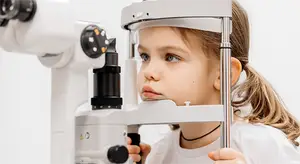
Every year, thousands of children sit in school hallways, squinting at a distant chart of letters. They read a few lines, receive a passing mark, and return to their desks. Parents breathe a sigh of relief, assuming their child's eyes possess perfect health. Yet, a basic school vision screening covers only a small fraction of what a child needs to navigate the visual demands of the classroom.
A school vision screening focuses almost entirely on distance visual acuity. It answers a single question: Can your child see the board from the back of the room? True vision involves a complex network of tracking, focusing, and binocular coordination. When these systems falter, a child struggles to read, learn, and thrive. For families in South Las Vegas, scheduling a comprehensive pediatric eye exam Las Vegas with Dr. Girma Yemane O.D. ensures that your child possesses the visual tools necessary for academic success. Call (725) 330-8364 or visit our office to book an appointment today.
The Hidden Gaps in School Vision Screenings
A school vision screening vs eye exam is much like comparing a basic blood pressure check to a full cardiovascular physical. The screening catches major, obvious issues, but it leaves quieter, more disruptive conditions completely undetected.
School tests routinely miss farsightedness. A child with severe farsightedness can often strain their eye muscles to read a distant chart clearly for a few seconds, passing the screening with flying colors. However, when that same child sits down with a textbook, their eyes must work overtime to sustain focus. This hidden strain leads to rapid fatigue, frustration, and a sudden aversion to reading.
Furthermore, basic screenings rarely evaluate how well a child's eyes work as a team. Proper tracking allows the eyes to glide smoothly across a line of text without jumping or skipping words. Accurate focusing allows a child to look down at a notebook and then up at the teacher without experiencing temporary blur. If these tracking and focusing mechanics fail, the classroom becomes a place of physical exhaustion.
Signs Your Child Is Struggling Invisibly
Children rarely complain about vision problems because they assume everyone sees the world exactly as they do. They adapt to the blur or the strain, leaving parents to look for subtle behavioral clues. If you notice your child exhibiting these habits, it may indicate a need for professional intervention:
- Holding books or tablets mere inches from their face.
- Rubbing their eyes frequently during reading or homework.
- Closing or covering one eye to focus on a page.
- Tilting their head significantly while trying to look at pictures or text.
- Avoiding desk work or experiencing a sudden drop in reading comprehension.
By addressing these issues early, you protect your child from unnecessary academic hurdles. If you live in the South Las Vegas or Henderson area, connecting with a trusted children's eye doctor Henderson at Las Vegas Eye Exam is the safest way to uncover these hidden obstacles.
What Happens During a Pediatric Eye Exam
A comprehensive medical examination gives a complete view of a child's ocular development. When you bring your child to see Dr. Girma Yemane O.D., the process goes far deeper than reading letters on a wall.
Advanced diagnostic tools allow the detection of subtle structural and functional issues. We evaluate eye alignment to rule out conditions like strabismus, commonly known as crossed eyes. The exam covers binocular vision, checking that both eyes work smoothly together to create a single, clear image. Specialized testing also measures refractive errors, revealing the precise level of nearsightedness, farsightedness, or astigmatism present. This meticulous care gives parents peace of mind, knowing their child's vision rests in expert hands.
Preparing Your Child for the Clinic
The idea of an eye test can sometimes cause mild anxiety in a young child. Parents can easily transform the upcoming visit into a positive, interesting experience.
Talking about the appointment beforehand helps normalize the event. Explain to your child that the doctor will use cool lights and special magnifying glasses to look at their eyes, much like a detective looking for clues. Emphasize that the tests are completely painless. Choosing a time of day when your child is well-rested and fed minimizes irritability. By framing the visit as a fun checkpoint on their growth milestone list, you set a confident tone for the entire afternoon.
Vision Care Services in Las Vegas
Every child deserves a clear path to learning, and that path begins with healthy eyes. Protecting your family's vision requires proactive care rather than waiting for obvious symptoms to appear.
We provide dedicated vision care services in Las Vegas designed to support children as they reach key developmental stages. Starting comprehensive exams at age five builds a strong foundation for future classroom victories. If your child is approaching school age, or if you suspect they strain to see comfortably, scheduling a professional evaluation provides the ultimate clarity. Partnering with a skilled pediatric optometrist south las vegas at Las Vegas Eye Exam ensures that your child steps into the classroom with the sharpest vision possible. Use our scheduler link to lock in your preferred morning or afternoon timeslot.
Frequently Asked Questions
How often should a child have a comprehensive eye exam?
Children should have a comprehensive medical eye exam before starting kindergarten, typically around age five. After the initial exam, scheduling a visit every year allows the doctor to monitor their rapidly changing vision and accommodate the increasing visual demands of school.
Can a child pass a school screening and still need glasses?
Yes. School screenings primarily evaluate distance vision. A child can easily pass the screening while still suffering from severe farsightedness, astigmatism, or eye tracking issues that cause major strain during reading and writing.
What are the most common signs of vision problems in young children?
Common indicators include frequent eye rubbing, tilting the head to look at objects, holding tablets unusually close, sitting right in front of the television, squirming or losing place while reading, and complaining of headaches after a school day.